Rethinking Watering: The Physics of Indoor Plant Survival
BotaniSense does not provide watering reminders. This guide starts with why, then goes further into a general discussion of how to water houseplants well.
01
Break the calendar myth
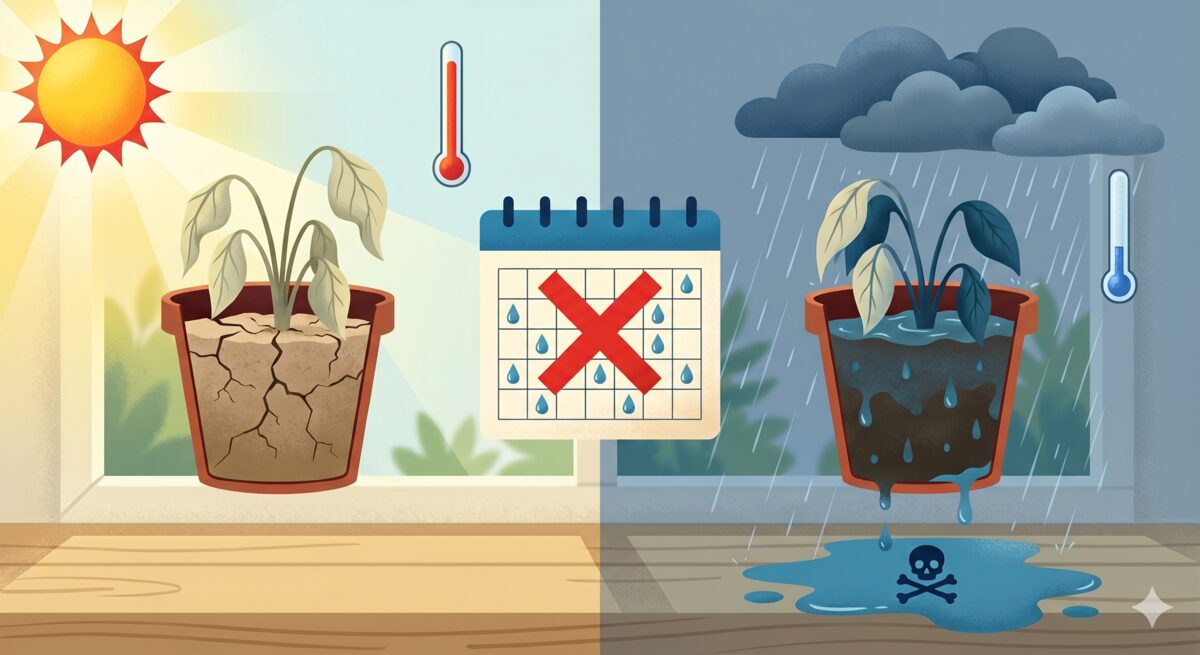
Plants live in a dynamic microclimate. A fixed “water every Tuesday” routine ignores how evaporation changes with light, temperature, indoor humidity, and even air-conditioning drafts.
Key insight: On a hot, dry sunny day, potting mix may dry out in three days; in a rainy winter week, the same soil can stay moist for twenty. Calendar watering is a leading cause of root drowning.
02
Know the species' native habitat
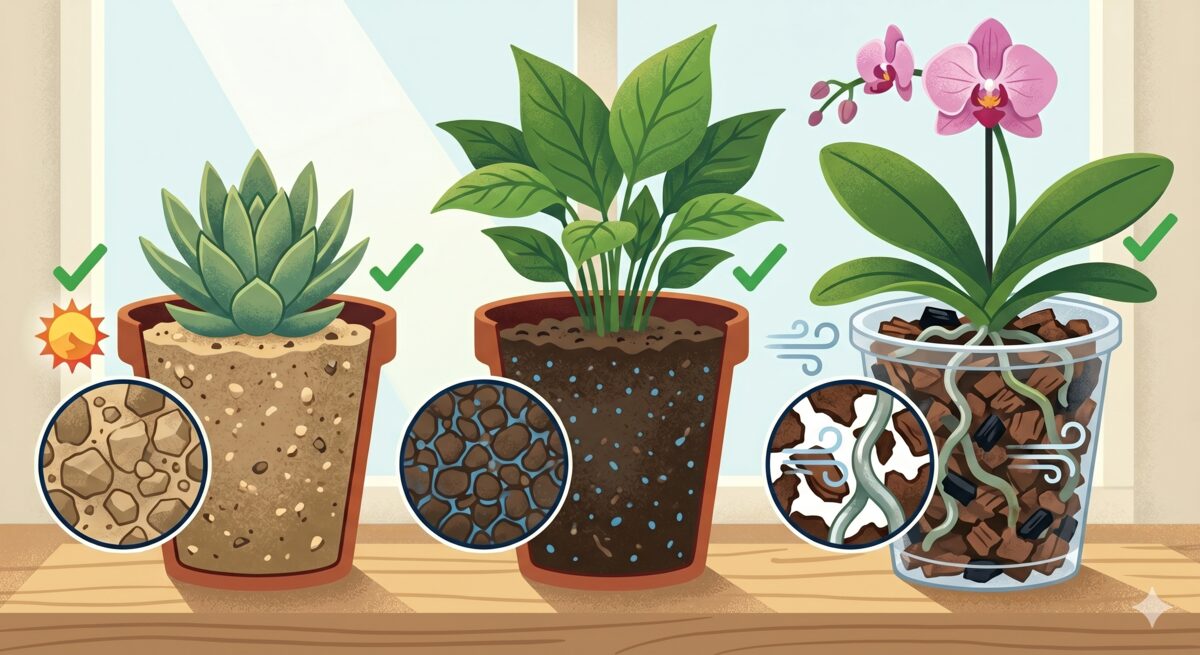
Before watering, understand the plant's evolutionary design. Cacti and succulents evolved for arid deserts and need full dry-down between drinks; ferns and rainforest floor plants prefer evenly moist—but never waterlogged—soil.
Key insight: Epiphytes like moth orchids grow on tree bark with roots in open air. Packing them in dense potting mix and watering often cuts off oxygen—the opposite of their ecology.
03
Probe deep: surface soil lies
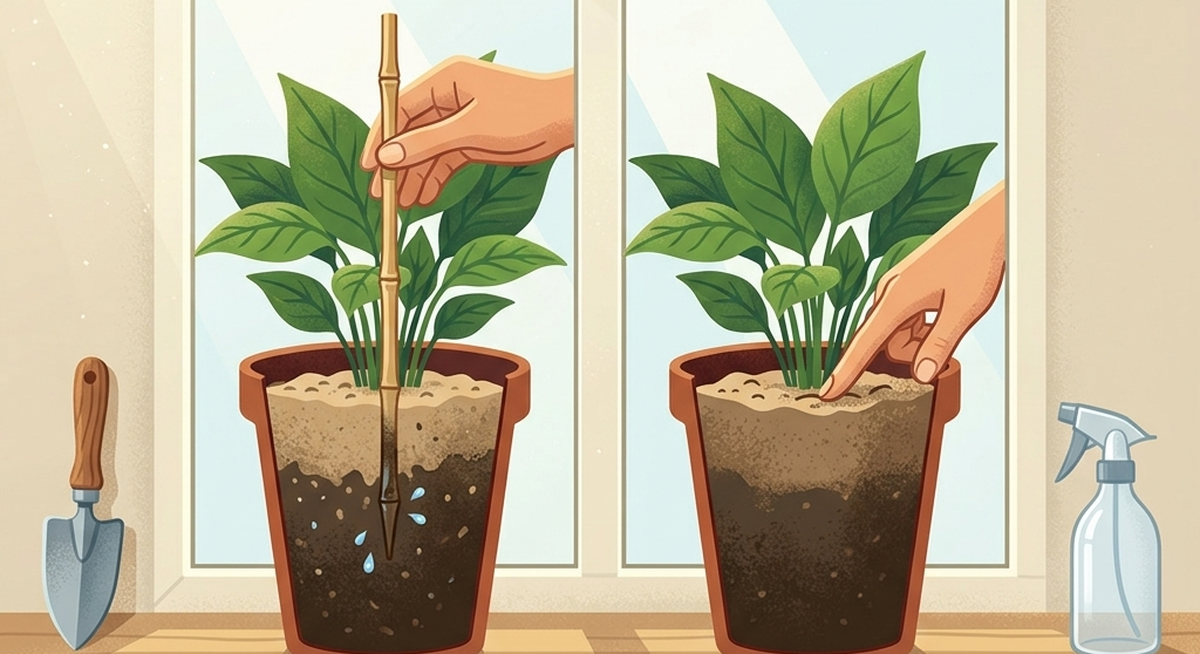
The top two centimeters of a pot meet the air and evaporate fastest. Surface dryness does not mean the bottom—where most roots live—is dry; it may still be saturated.
Key insight: Do not trust a fingertip on the surface. Insert a long wooden skewer to the bottom, wait a few seconds, then pull it out. Dark soil stains or damp wood mean the core is still wet—hold off on watering.
04
Soil volume is your reservoir
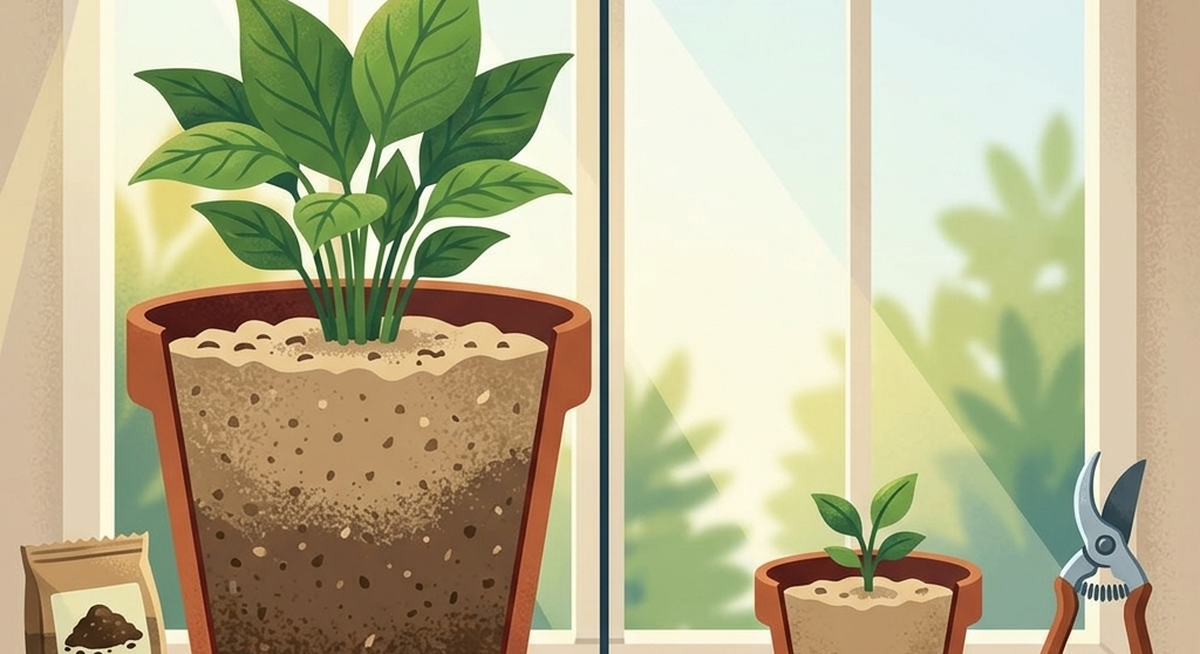
Pot size sets the drying curve. The same species in a tiny nursery pot may dry in three days, while a large floor planter can hold moisture for weeks because of its massive soil core.
Key insight: Many large container plants die from drought at the surface while sitting in soggy bottoms. For big pots, watering less often is often the safest strategy.
05
Soak through: reshape root architecture
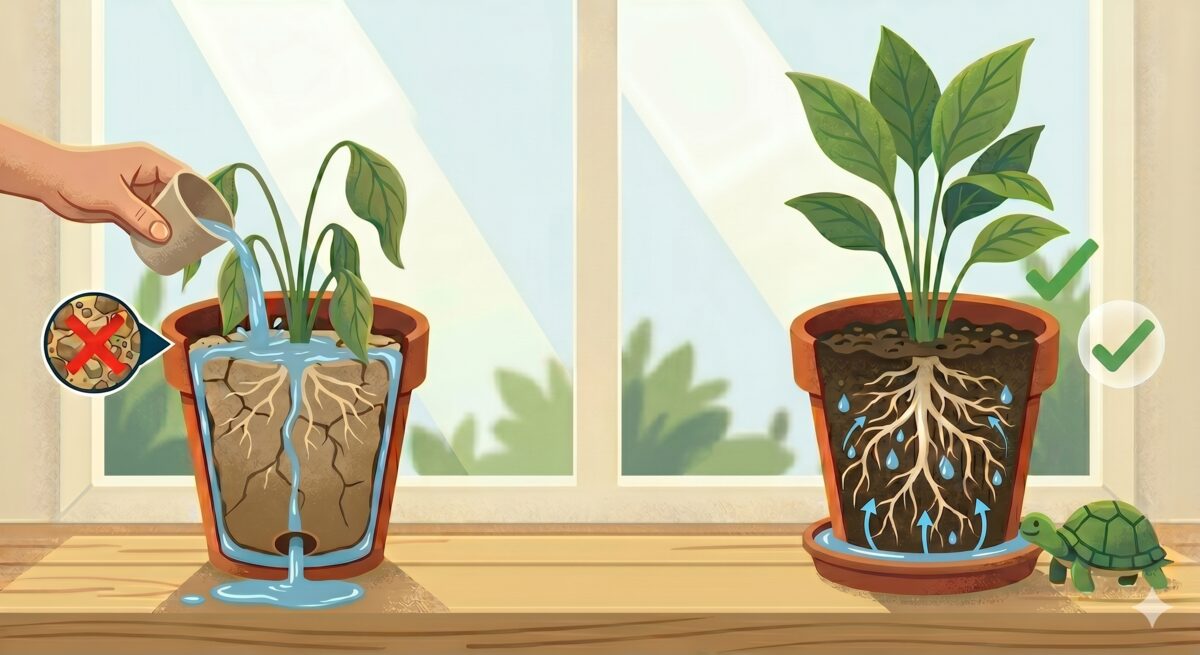
When it is time to water, how matters as much as when. Sprinkling a small cup each time keeps moisture in the top layer, encouraging weak shallow roots while deeper roots starve.
Key insight: The “soak” in “dry then soak” means water must move evenly through the entire profile until it runs freely from the drainage hole—pulling stale air out and fresh oxygen in.
Although the following are not strictly about watering, they are closely related—how you set up a pot and what you put in it shape where water sits and whether roots can breathe.
06
Gravel at the bottom: a drainage trap
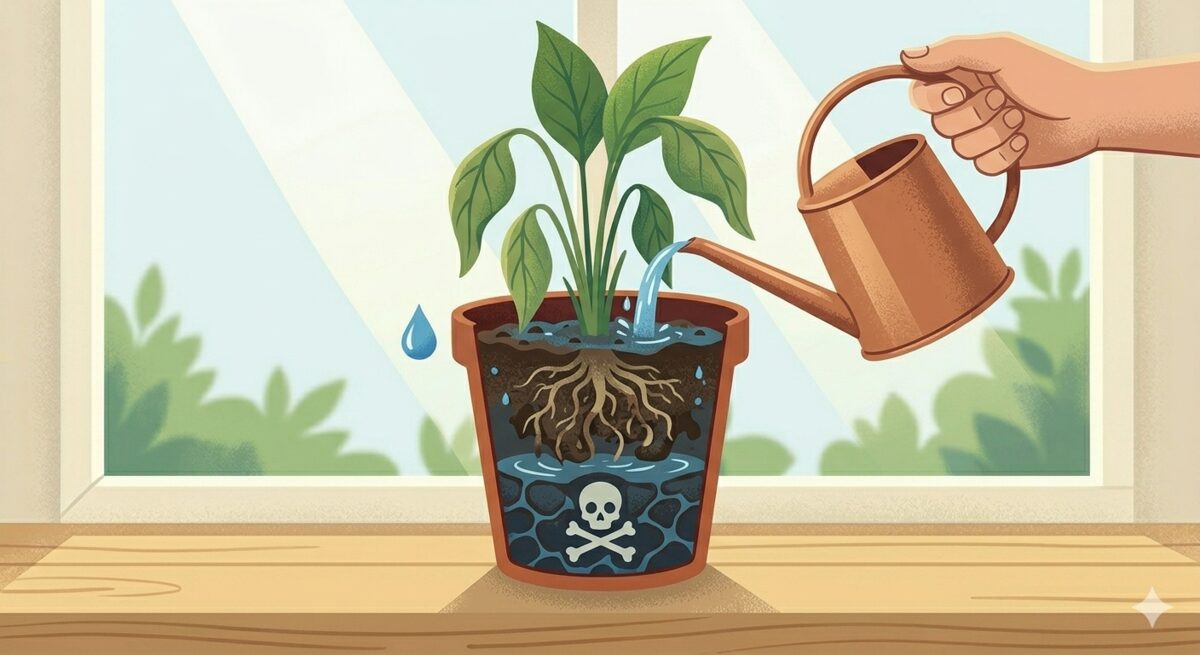
Gravel layers do not improve drainage—they worsen it. By interface physics, gravity cannot easily overcome capillary tension from fine soil above into coarse gravel below. Water pauses at the boundary until the upper soil is fully saturated.
Perched water table: Gravel raises the saturated zone closer to roots and accelerates rot. Use a uniform potting medium throughout the container instead.
07
The drainage hole: a non-negotiable exit
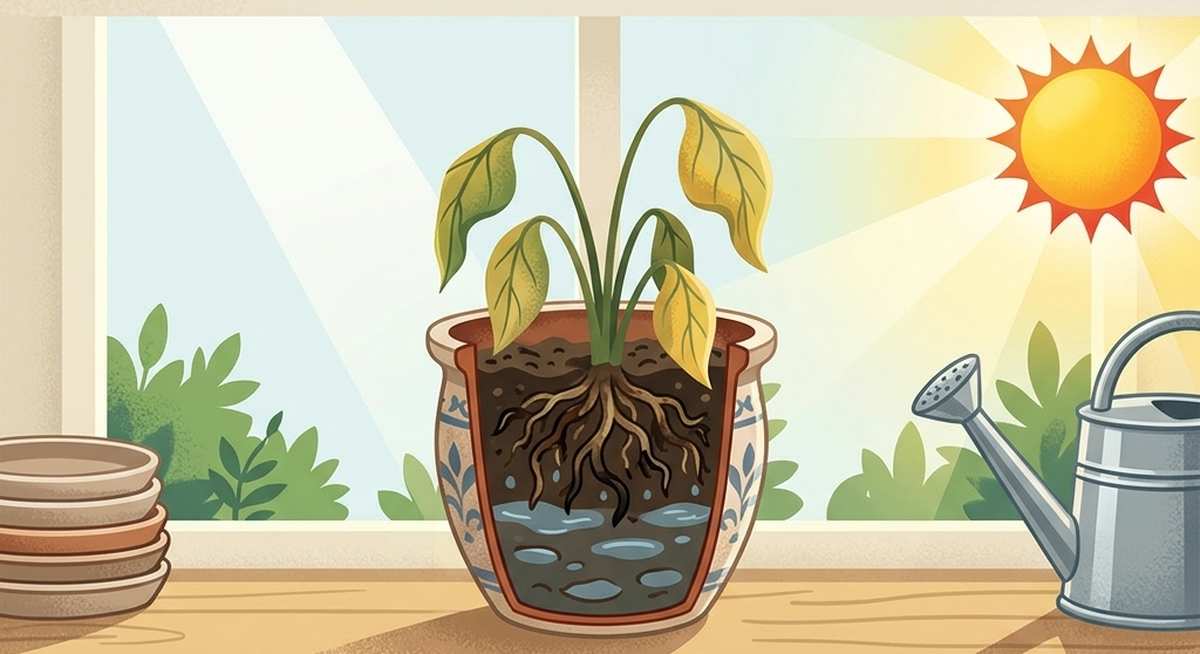
Never plant directly into a container without a bottom drainage hole. Without a hole, excess water has no escape route, accumulating at the base of the pot and permanently suffocating the roots, leading to rot and death.
Drowning sentence: Even if you water carefully, a pot without a hole traps stagnant water at the bottom. The roots sit in a swamp, starve of oxygen, and rot from the base up. Always use a pot with a drainage hole, or use a plastic nursery liner inside a decorative pot.
Academic references
1
Perched water table and container capacity
Summary: Foundational substrate physics defines container capacity—the water a pot retains after drainage—and the perched water table, a saturated zone whose height depends on particle size, not pot dimensions. This explains why surface dryness misleads and why pot volume changes drying time.
Summary: Peer-reviewed container production research shows roots need adequate air-filled porosity; saturated substrates limit oxygen diffusion (roughly 10,000× slower in water than in air). The practical remedy is substrate porosity and avoiding chronic saturation—not a fixed watering calendar.
Summary: A 2025 controlled study measured how gravel, sand, and other drainage layers affect container water retention. Interface physics can raise a perched zone at the soil–gravel boundary; experimentally, most layers reduced total retention in organic media—supporting uniform potting mix over bottom gravel for predictable moisture.
Summary: Reviews of waterlogging stress document rapid oxygen depletion in saturated rhizospheres, suppressed root respiration, and toxic metabolites—relevant when pots lack drainage or are watered before prior moisture exits.